Renewables for the Win!
Renewables Outshine Fossil Fuels in 2025!
News coming out about renewables has really gotten my attention lately and gives me some hope for the future!
In an article from The Guardian published this month, researchers say that wind and solar overtook fossil fuels for European Union power generation in 2025. Per the article,
“Turbines spinning in the wind and photovoltaic panels lit up by the sun generated 30% of the EU’s electricity in 2025, according to an annual review. Power plants burning coal, oil, and gas generated 29%.”
But that’s Europe, not the US. What about here?
Cornell University reports that in March of 2025, fossil fuels accounted for less than 50% of US electricity production for the FIRST TIME EVER! March is typically a relatively mild month not requiring either peak heat or air conditioning, and is also a peak month for wind power production.
The article goes on to say that “The milestone is the result of a long-term decline of fossil generation in the US power sector, with wind and solar growing substantially over the last decade.”
Also, “Ten years ago, in March 2015, fossil generation still provided 65% of US electricity generation. Wind and solar generation stood at just 5.7%. Since then, the share of wind and solar power has more than quadrupled.”
And, “Solar power is set to account for more than half of new generating capacity installed in the US in 2025, with more than a third of new solar panels going to Texas. Solar’s rise has been extraordinary.”
Yes, I understand that March alone does not represent an entire year for US energy production, but I take this as a huge step forward!
What This Means for North Idaho
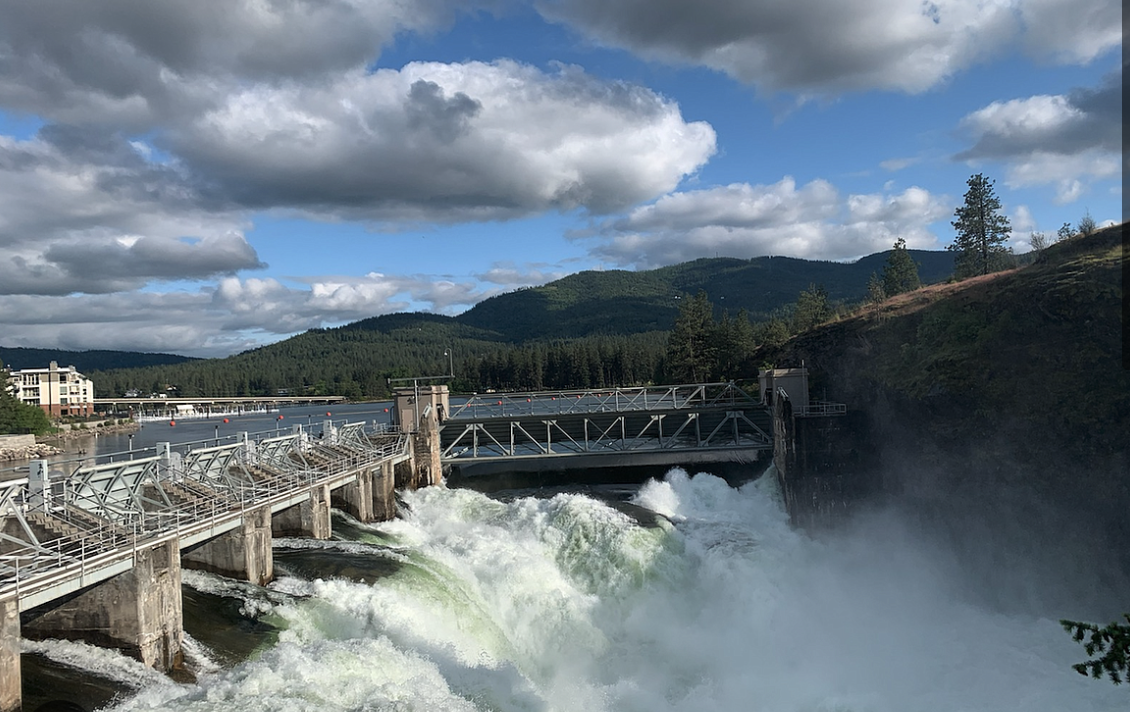
While the national headlines are inspiring, we here at the Kootenai Environmental Alliance (KEA)are keeping our eyes on the local grid. In Idaho, we have a head start thanks to our historical reliance on hydroelectric power, but the landscape is shifting fast.
As of early 2026, Idaho remains a national leader in renewable production, with roughly 68% of our in-state generation coming from renewable sources—primarily our mighty rivers. However, as our population in Kootenai County continues to boom and we experience record-breaking droughts, our local utilities are facing a crossroads.
The Local Outlook:
Avista's Clean Energy Plan: Avista recently filed its 2025 Clean Energy Implementation Plan, targeting 76.5% clean energy for its customers by 2029. They are leaning heavily into "demand response" programs—using smart tech to help us lower our usage during cold North Idaho winter mornings.
Idaho Power's Pivot: Further south, but affecting our regional grid, Idaho Power is aiming for 100% clean energy by 2045. However, they’ve recently faced criticism for planning new natural gas units to meet the massive energy demands of incoming data centers.
The "Usage Tax" Change: Keep an eye on your bills! Starting January 2026, a new "State of Idaho Usage Tax" (from HB 329) has appeared on utility statements. It’s a reminder that as we change how we make power, we are also changing how we pay for the infrastructure that delivers it.
How You Can Take Action in the Panhandle
The progress we’re seeing globally is fueled by grassroots pressure. Here is how you can help keep the momentum going in Coeur d’Alene and beyond:
Home Efficiency: The federal Residential Clean Energy Credit still offers a 30% tax credit for solar and battery storage installed through 2032. Even in our cloudier climate, solar-plus-storage is becoming a popular way for North Idahoans to ensure "grid resiliency" during winter storms.
State Incentives: Don't forget the Idaho Residential Alternative Energy Tax Deduction. You can deduct 40% of the cost of solar, wind, or geothermal energy devices at the state level in the year they are installed (up to $5,000 annually).
Vocal Advocacy: Attend the upcoming Northwest Power and Conservation Council public hearings in mid-2026. They are drafting the Ninth Power Plan, which will dictate our region’s energy strategy for the next 20 years. Idaho needs a seat at that table to ensure we don't trade our clean future for short-term fossil fuel fixes.
The "extraordinary rise" of solar and wind isn't just a story for Texas or Europe—it’s a story we are writing right here in the shadow of the Selkirks. Let's keep pushing for a cleaner, local energy future!
