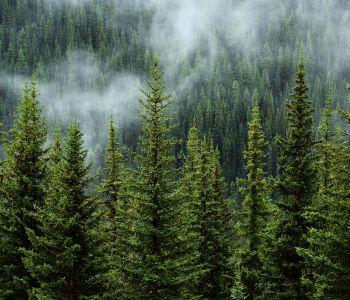
The Cost of Logging Our National Forests
It Goes Beyond Dollars
The Idaho Panhandle National Forest (IPNF), which lies out our back door, is in Region One of the National Forests’ system. Region One includes Montana and Northern Idaho, two national forests with some of the most spectacular forests in the lower 48, and the most heavily logged.
At its inception in the early 1900s, the original intent of the Forest Service (FS) was to demonstrate that long-term sustained timber harvest could be profitable for the private sector. This did not turn out to be the case.
By the 1920s, then FS Chief William Greeley, proclaimed that by including the “nonmonetary benefits” of logging - such as access to recreation, fire protection, improvement of wildlife habitat, etc. - timber sales would exceed total costs. If this seems like “Voodoo Economics,” it is. However, the claim that benefits exceed total costs continues to be the main rationale for FS timber management policies today.
The profitability of FS timber sales went unchallenged until the 1970s, when reports from the University of Montana School of Forestry, the Natural Resources Defense Council, as well as economists from Resources for the Future found forest management wasteful and inefficient. None of these findings persuaded Congress to reexamine the conventional wisdom that FS timber sales were profitable.
In 1980, the Natural Resources Defense Council authored another report, Giving Away the National Forests: An Analysis of U.S. Forest Service Sales Below Cost. The report compared specified annual protection, management, and investment costs with revenues for each national forest for five years (1974-1978), and found that, depending on the costs included, about half of the national forests had costs exceeding revenues for all or part of that period.
This sparked Congress to do its own cost and revenue data analysis on FS timber sales, and in 1984, it published four studies that reached the same conclusion –timber sales from many national forests did not recover the costs to prepare and administer the sales.
While there were attempts to establish national forests' financial reporting standards, no agreed-upon data points were codified. The FS continues to administer deficit sales at taxpayers' expense. A 2023 report by the Center for a Sustainable Economy found “taxpayer losses of nearly $2 billion a year associated with the federal logging program carried out on National Forest and Bureau of Land Management lands.” Millions of those dollars subsided logging projects in Region One.
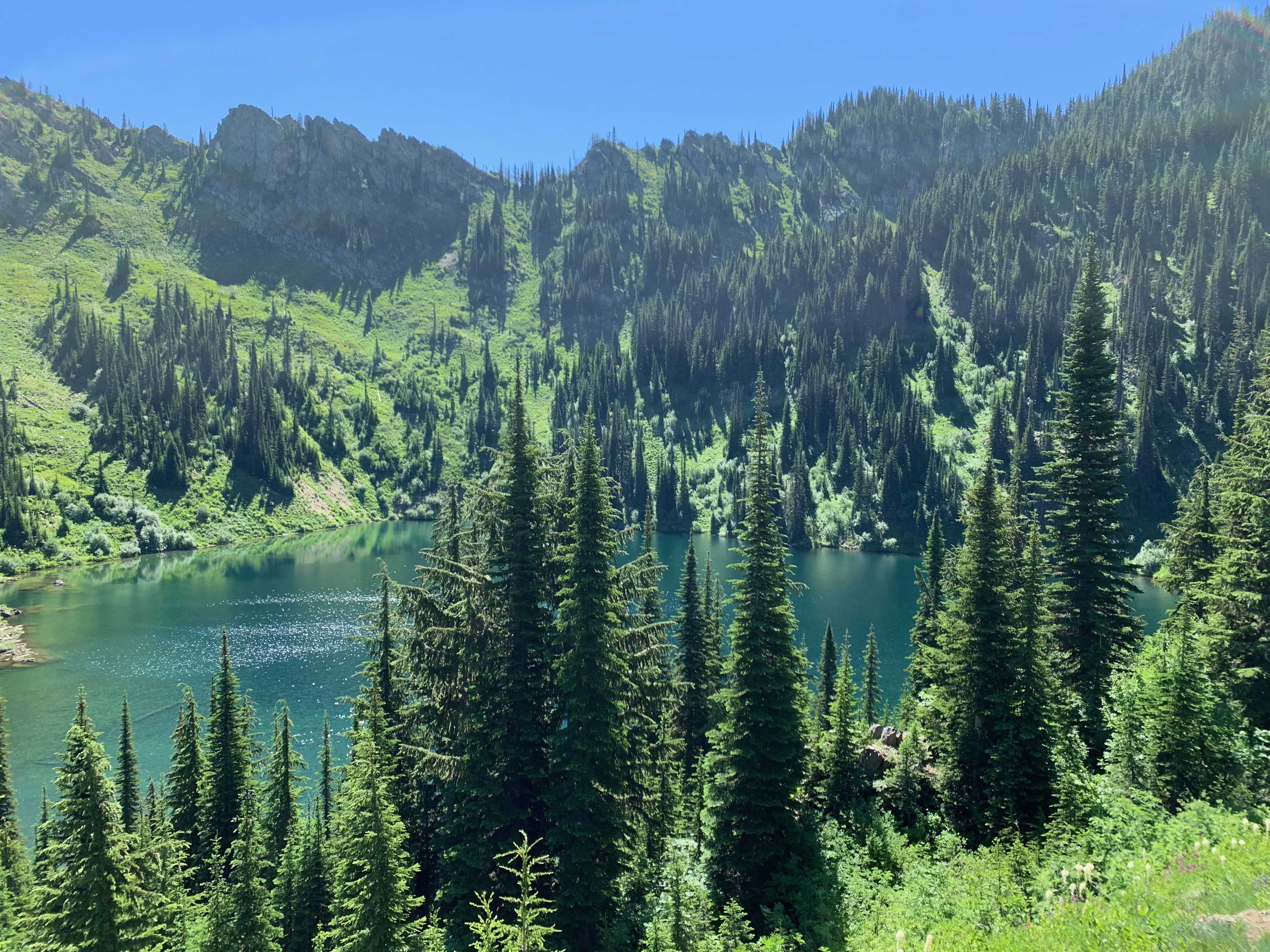
In addition to these losses are significant “externalized” costs to the public that the FS does not count, such as pre-commercial thinning of forests (small diameter trees and brush mastication in preparation for large-scale logging); fruitless attempts to keep biologically rich top soils, reduced to sediment by newly bulldozed logging roads, and clearcuts, from clogging streams and destroying fisheries, and the equally futile attempt to stop new noxious weed infestations brought in on bulldozers, trucks, and other logging equipment that will require perpetual chemical treatment to contain. Unless there is an endangered or threatened species documented in the proposed project site, wildlife habitat loss gets a passing glance. How do you place a cost on elements of a forest ecosystem that are priceless?
The promise of supplying timber from the national forests is an old one, going back to 1897 when our public forests were simply referred to as Forest Reserves. The stated purpose at that time was “to furnish a continuous supply of timber for the use and necessities of citizens of the United States.”
In 1960, the Multiple-Use Sustained-Yield Act expanded on this promise by requiring FS management for “sustained yields” (annual “timber targets” required of all national forests) defined as:
Sustained yield of the several products and services” means the achievement and maintenance in perpetuity of a high-level annual or regular periodic output of the various renewable resources of the national forests without impairment of the productivity of the land.
It's evident that over the years our forests have become very impaired; fisheries, wildlife habitat, native plants and birds, biodiversity, and ecosystem connectivity have all suffered. Anyone who has spent their life enjoying our national forests has witnessed the consequential landscape-scale degradation resulting from placing extraction profits over protection, conservation, or even restoration.
For whom is the land being productive? For the citizens who own the land or the extraction industries that collect profits at the cost of the forests’ impairment. It is certainly not “productive” for the wildlife that are being squeezed into islands of survival as roads are built (the IPNF is the most heavily roaded national forest) for logging, ORVs, mountain bikers, snowmobiles, and miscellaneous recreationists that have reached an industrial scale of use.
There is something amiss in our national forests when FS management allows the profits to be privatized and the full, true costs to be socialized. Voodoo economics in action.
Under the guise of “fuels reduction,” “healthy forest restoration” and other misleadingmarketing slogans, this paradigm is only going to get worse.
But that’s another story........