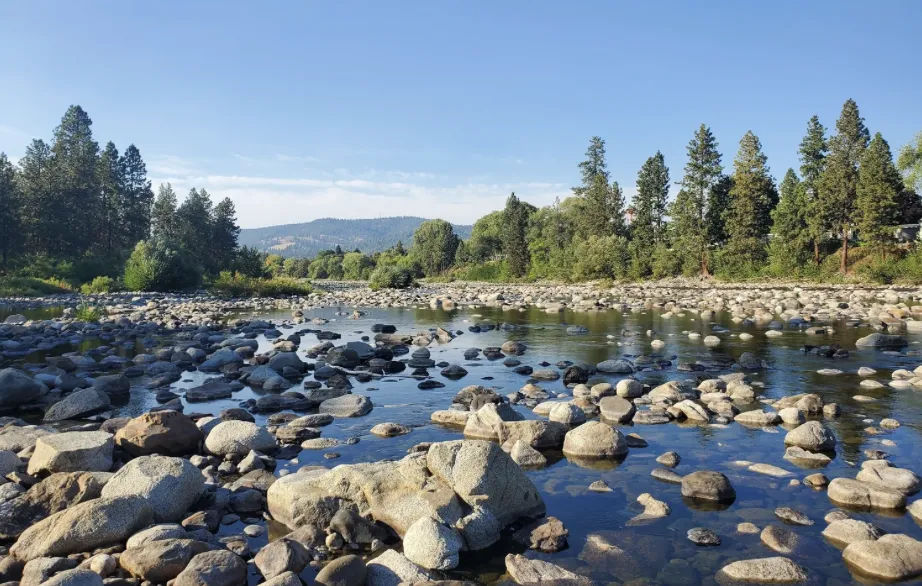
Water Conservation Is Not Optional
When a River Runs Dry: Understanding the Spokane River's Losing and Gaining Reaches
The first time I heard that the Spokane River had run dry, I honestly didn't believe it. A river that size - gone? But that was about this time last year, and now here we are again with the same startling news: the Spokane River is dry again in parts of the Spokane Valley. It's the kind of thing that stops you in your tracks and makes you want to understand what's really going on beneath the surface - quite literally.
To make sense of it, I turned to the people who know this river best: the Spokane Riverkeeper.
Losing Reach and Gaining Reach: What Does That Mean?
The Spokane Riverkeeper introduced me to two terms I hadn't encountered before, and once you understand them, the mystery of a dry riverbed starts to make a lot more sense.
A losing reach is a stretch of river where water seeps downward out of the riverbed and into the aquifer below. The river, in a sense, is feeding the groundwater. This happens naturally where the riverbed is permeable, and the water table sits lower than the river's surface. During periods of low flow, a losing reach can pull so much water out of the river that the surface flow is dramatically reduced - or disappears entirely.
A gaining reach, on the other hand, works in the opposite direction. Here, groundwater from the aquifer flows upward into the river, adding to its volume. This is why you can have a dry stretch of riverbed in one location, and then, just a few miles downstream, water reappears seemingly out of nowhere. The aquifer is essentially giving the river back what it borrowed - or what was lost upstream.
It's a dynamic, interconnected system, and one that most of us driving over a bridge or watching water rush past never think twice about. But understanding this relationship between surface water and groundwater is critical to understanding how our river behaves - and why it's vulnerable.
Where The River Goes Dry
The current dry reach of the Spokane River sits between Barker Road and Sullivan Road in Spokane Valley and Greenacres. This stretch falls near the tail end of the river's losing reach, where water has been steadily seeping into the aquifer and surface flow dwindles to nothing. As you move downstream toward Sullivan Road, you enter a gaining reach, and water begins to reappear as the aquifer starts contributing back to the river.
It's a strange and striking thing to see - a wide, rocky riverbed completely exposed to the sun where there should be flowing water. And according to the Spokane Riverkeeper, it's becoming a more frequent and concerning sight.
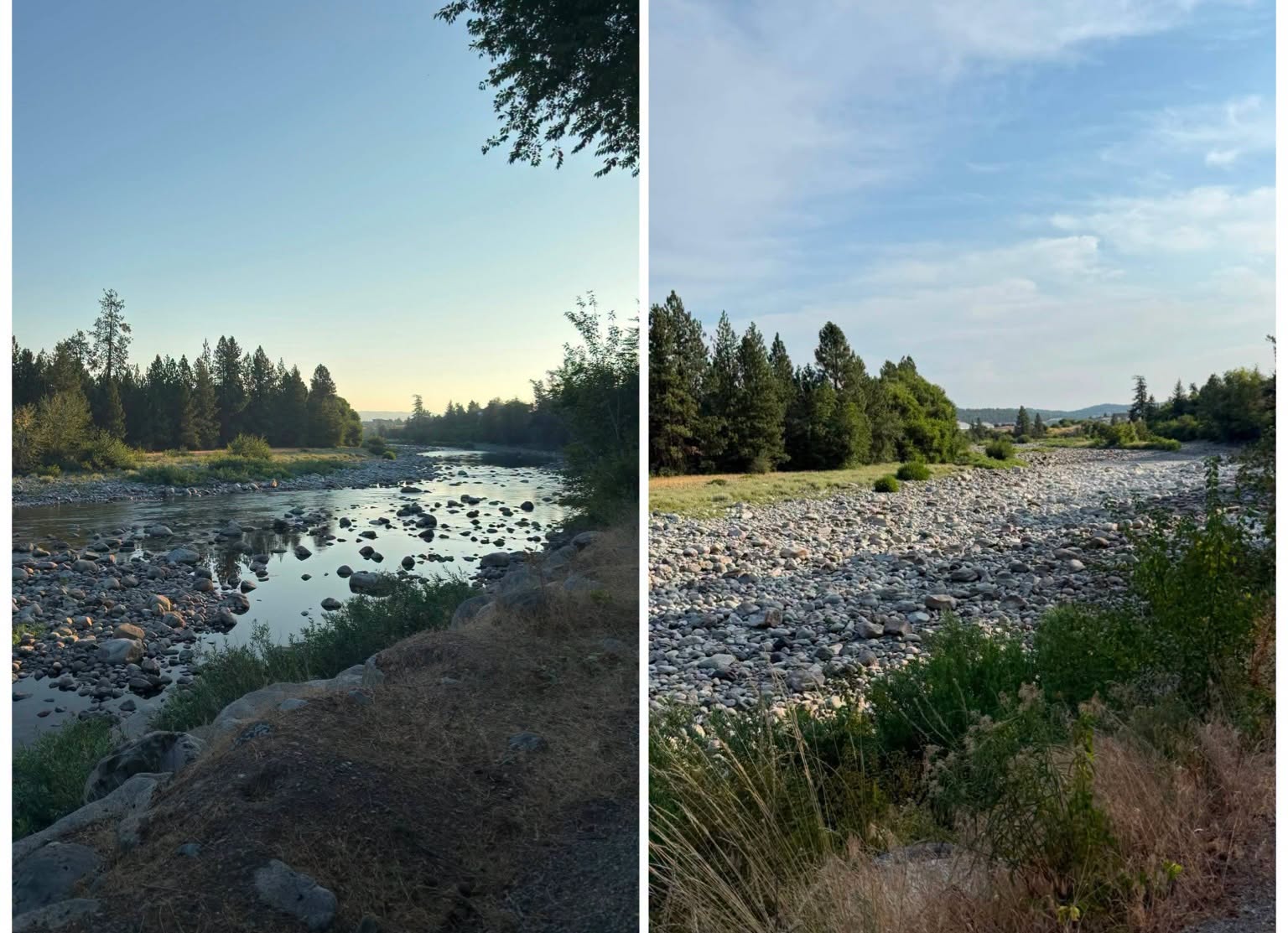
A System Behaving Differently
What worries the Spokane Riverkeeper isn't just that the river goes dry - it's that the losing reach is behaving differently from year to year, even when water releases from Post Falls Dam are relatively consistent. That inconsistency is a red flag. It suggests that something beyond simple seasonal low flows is at play.
Drought is part of the picture. Extended dry periods reduce overall precipitation and snowpack, meaning less water enters the system to begin with. Climate change is amplifying those drought conditions and altering the timing and volume of snowmelt that feeds our rivers. Increased water use - for agriculture, residential irrigation, and development - draws more from both the river and the aquifer. And shifts in how water moves through the system over time, potentially due to changes in soil composition, land use, or aquifer recharge patterns, contribute to a river that behaves less predictably than it once did.
The honest answer is that it's all of these things working together, and that's what makes it complicated - and urgent.
The Aquifer Connection: A Local Wake-Up Call
The relationship between the Spokane River and the Spokane Valley-Rathdrum Prairie Aquifer is inseparable. This aquifer, one of the largest and most productive in the Pacific Northwest, supplies drinking water to hundreds of thousands of people across the region. The river feeds it, and in gaining reaches, it feeds the river back. When that balance is disrupted, both suffer.
This makes it all the more concerning that a recent levy to establish a Western Aquifer Protection District in Spokane failed at the ballot box. The proposed district would have created a dedicated funding source and governance structure for protecting the western portion of the aquifer - the very groundwater that underlies much of the urban Spokane area. Its failure leaves a significant gap in the region's ability to proactively manage and safeguard this critical resource.
Aquifer protection isn't an abstract environmental concern - it's a drinking water issue, a public health issue, and, as we're seeing with the dry riverbed in Spokane Valley, a river health issue. When we fail to protect our groundwater, we feel the consequences in our taps, our streams, and our communities. The levy's defeat is a setback, but it also highlights how much education and advocacy work remains to be done around the importance of groundwater stewardship.
What We Can Do
One of the clearest takeaways from everything I've learned is that water conservation is not optional - it's essential. Every gallon we keep in the river and out of unnecessary use genuinely matters when flows are this low. That means:
Watering lawns and gardens in the early morning or evening to reduce evaporation
Fixing leaky faucets and irrigation systems
Choosing drought-tolerant native plants for landscaping
Being thoughtful about when and how much we irrigate
Supporting policies and ballot measures that protect our water resources
None of these actions alone will refill a dry riverbed. But collectively, they reflect the kind of community-wide commitment to our watershed that this moment calls for.
A Thank You, and a Call to Action
A sincere and heartfelt thank you to theSpokane Riverkeeper for their tireless dedication to monitoring, protecting, and advocating for the Spokane River and our shared watershed. The work of organizations like Spokane Riverkeeper - and here at home, Kootenai Environmental Alliance - depends on an informed and engaged public.
If seeing a river run dry doesn't move us to act, what will? Learn more, stay curious, conserve where you can, and support the organizations and policies working to keep our rivers flowing for generations to come.
Kootenai Environmental Alliance works to conserve, protect, and restore the environment of the Idaho Panhandle and Coeur d'Alene Basin. Visit us at kealliance.org to learn more and get involved.
